![Self-Directed Learning: Definition, Examples, and How to Support It [2026]](https://images.unsplash.com/photo-1499750310107-5fef28a66643?w=1200&h=630&fit=crop)
Self-Directed Learning: Definition, Examples, and How to Support It [2026]
What self-directed learning means at work, how it differs from self-paced learning, examples that actually work, and a plan template your team can use.

Self-directed learning is one of those terms that gets used to mean "we gave people a content library and hoped." Actual self-directed learning is more structured than that, and the difference determines whether it produces capability or just activity.
This guide covers what the term means, how it differs from self-paced learning, what it looks like in practice, and how to support it without turning it into unmanaged drift.
What is self-directed learning?
Self-directed learning is learning where the learner takes primary responsibility for diagnosing what they need, setting goals, choosing resources, and evaluating whether they got there. The organization provides support and resources. The learner drives.
The concept comes from adult education, most influentially Malcolm Knowles, who framed self-direction as a defining feature of how adults learn. His broader model of andragogy underpins most corporate learning practice, which we cover in adult learning theory.
The definition has a sharp edge worth noticing: if the learner is not choosing the goal, it is not self-directed. Assigning a course and letting someone take it whenever they like is something else.
Self-directed versus self-paced
These are used interchangeably and should not be.
Self-paced learning is about timing. The content, the sequence, and the objectives are set by someone else. The learner controls when and how fast they move through it. A compliance course you can take any time this month is self-paced.
Self-directed learning is about control. The learner decides what to learn and how, based on a need they have identified.
Most corporate "self-directed learning" initiatives are actually self-paced delivery with a large catalogue. That is a perfectly reasonable thing to build, but calling it self-directed sets expectations it will not meet, and it explains why so many content library subscriptions show high sign-up and low sustained use.
The practical distinction:
| Self-paced | Self-directed | |
|---|---|---|
| Who sets the goal | Organization | Learner |
| Who chooses resources | Organization | Learner |
| Who evaluates success | Organization | Learner, ideally with a coach |
| Typical artifact | Assigned course with flexible deadline | Learning plan owned by the individual |
Both belong in a mature program. Compliance and role-critical training should not be self-directed. Skill development beyond the role usually should be.
Why it matters at work
Three reasons organizations invest in it.
Role change outpaces curriculum. Jobs change faster than L&D teams can build content for them. People who can diagnose their own gaps and close them adapt without waiting for a course to exist.
Motivation is different when the goal is yours. Learning someone assigned you is a task. Learning you chose is an interest. The second survives competing priorities better.
It scales without headcount. A small L&D team cannot personally develop everyone. Building the capability to self-direct is leverage.
The counterweight, and it is real: self-direction requires skills many people have never been taught. Handing someone a library and expecting productive self-direction is like handing someone a gym membership and expecting a training programme. Support is what makes the difference.
What it looks like in practice
Concrete examples, from lighter to heavier structure.
A developer learning a new framework for an upcoming project. They identify the gap, pick documentation and a course, build a small thing to test understanding, and ask a senior colleague to review it. Classic self-directed learning, and it happens constantly without anyone calling it that.
A manager working on delegation after feedback. They identify the specific behavior, choose reading and a peer to observe, practice deliberately, and check in with their own manager monthly.
An individual learning plan tied to a career goal. A designer wanting to move toward research picks a set of capabilities, sequences them over two quarters, and reviews progress with their manager quarterly.
A learning circle. Four people with a shared goal meet fortnightly, each pursuing their own path but reporting to the group. The social commitment addresses the follow-through problem that kills most solo plans. Our social learning guide covers the mechanics.
A stretch project with a learning contract. Someone takes on work slightly beyond their current capability, with an explicit agreement about what they are trying to learn and who is supporting them. This is the highest-return version, because the practice is real work.
Notice that four of the five involve another person. Purely solitary self-directed learning has poor completion rates. The social element is not decoration.
The self-directed learning plan
The plan is the artifact that turns intention into something reviewable. It should fit on one page.
1. The goal, stated as a capability. "Can run a user research interview and synthesize findings" rather than "learn user research." Observable, so you can tell when you arrive.
2. Why it matters. One line connecting it to work or career direction. This is what you re-read when motivation dips.
3. Current state. What you can already do. Honest assessment prevents starting too far back or too far ahead.
4. Resources. Specific: a named course, a book, a person to shadow, a project to volunteer for. Vagueness here is the most common reason plans stall.
5. Practice. How you will actually do the thing, not just consume material about it. Every plan needs this and most drafts omit it.
6. Evidence of progress. What will exist that does not exist now. A conducted interview, a written synthesis, a shipped feature.
7. Checkpoints. Dates and, ideally, a person. Monthly is usually right.
8. Timeframe. A quarter is a good default. Shorter feels rushed for meaningful capability; longer loses urgency.
The plan structure overlaps deliberately with our employee training plan template. The difference is that the learner writes this one.
How organizations can support it
This is where most programs are thin. Announcing that learning is now self-directed and buying a content subscription is not support.
Give people time, explicitly
Learning time that competes with delivery work loses every time. Organizations serious about this allocate it: a fixed block, protected, on the calendar. Vague encouragement to "learn continuously" without time is a request for unpaid effort.
Teach the skill of self-direction
Most people were never taught to diagnose a capability gap or design practice. A short programme on how to write a learning plan, how to choose resources, and how to know when you have arrived does more for outcomes than a larger content library.
Provide curation, not just volume
A catalogue of thousands of courses is an obstacle. Curated paths for common goals reduce the choice cost dramatically while leaving the decision with the learner. Our training content curation guide covers doing this well, and learning path design covers structuring the paths themselves.
Make managers part of it
The manager conversation is the highest-leverage support mechanism. It takes fifteen minutes a month and provides the accountability that solo plans lack. Managers need to be equipped for it, which is a training need of its own. See manager training programs.
Let people find things
Search that works, sensible categorisation, and content described by what it helps you do rather than by internal course codes. A resource nobody can find does not exist.
Recognise completion
Not necessarily formally. Sharing what someone learned in a team meeting, or letting them teach it, does more for continued engagement than a badge. Teaching is also the strongest consolidation mechanism available.
Where self-directed learning is the wrong tool
Being clear about this preserves credibility.
Compliance and safety. These have defined content, defined recurrence, and legal consequences. Assign them, track them, and do not pretend they are a choice. See compliance training best practices.
Onboarding. New hires do not yet know enough to diagnose what they need. Structure the first month, then open it up.
Anything with a single correct procedure. If there is one right way to do the task, teach the right way. Discovery learning is inefficient when the answer is known and the cost of getting it wrong is high.
Urgent capability gaps. If the business needs a skill in six weeks, direct the learning. Self-direction operates on a longer timescale.
Supporting it with your platform
The tooling requirements are modest. What helps:
A findable library. Content organized so someone can locate what fits their goal. Our content library supports this structure.
Optional enrollment alongside mandatory. Learners should be able to self-enroll in things not assigned to them. If everything is mandatory-only, self-direction has no surface. The enrollment page covers the distinction.
Progress visibility for the learner. People tracking their own progress need to see it without asking an administrator.
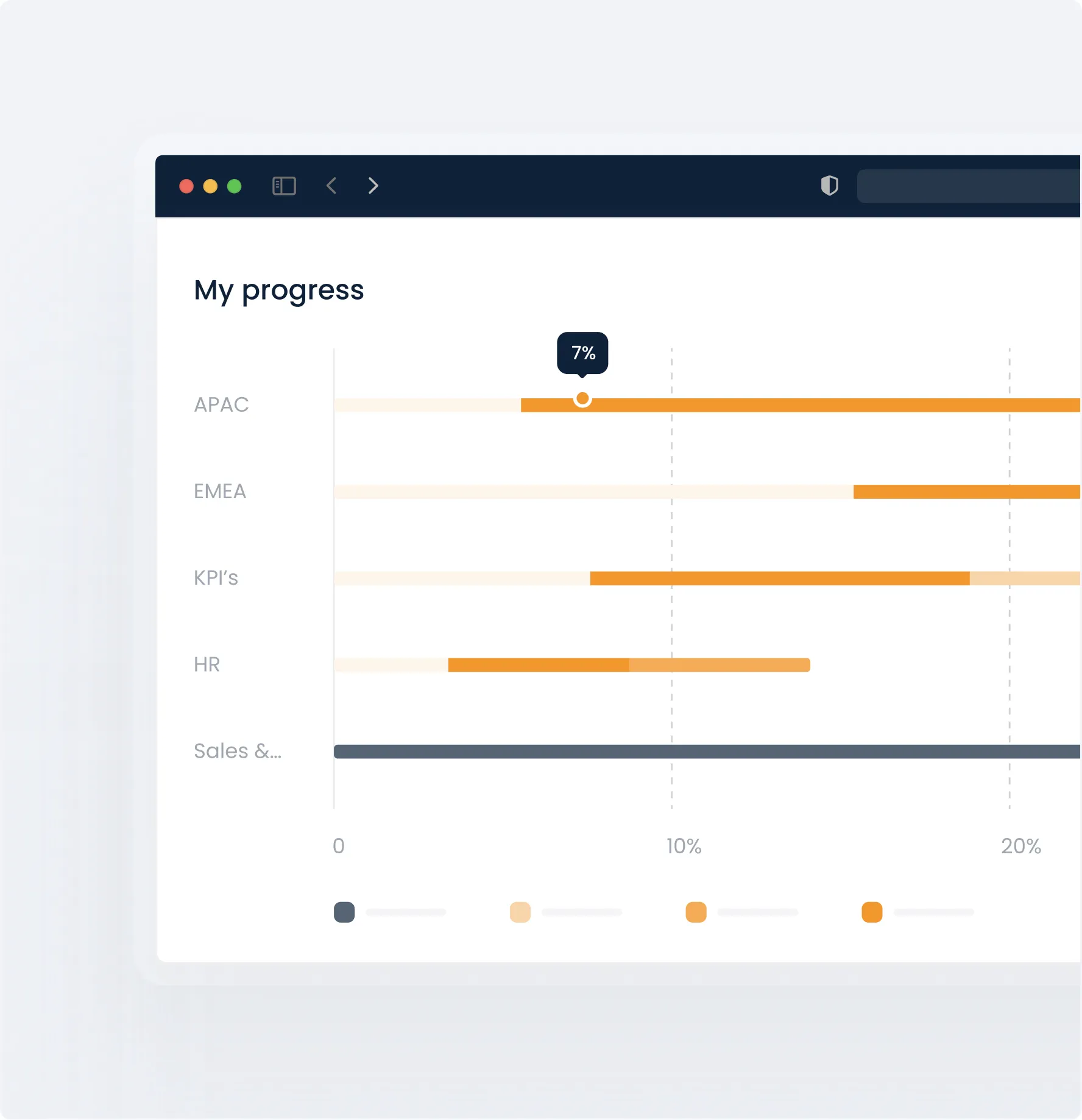 A learner's own progress view
Somewhere to hold the plan. Even a simple structured document, kept in the same place as the learning, beats a plan in a personal note nobody revisits.
Reporting for L&D on what people actually choose. Self-selected learning patterns are a strong signal about where the organization feels gaps. Our learning analytics guide covers reading it.
A realistic starting point
Do not launch a self-directed learning initiative organization-wide. Start with one team that has a genuine development need and a manager willing to run monthly check-ins.
Give them the plan template, a curated set of resources for the goals they name, and protected time. Run it for a quarter. Look at what got finished, what stalled, and why.
What you will almost certainly find is that plans with a practice component and a named check-in partner completed, and plans that were a list of courses did not. That finding is the design brief for the wider rollout.
Ready to give your team learning they can actually drive? Start your free trial and build a curated path they can choose from.